
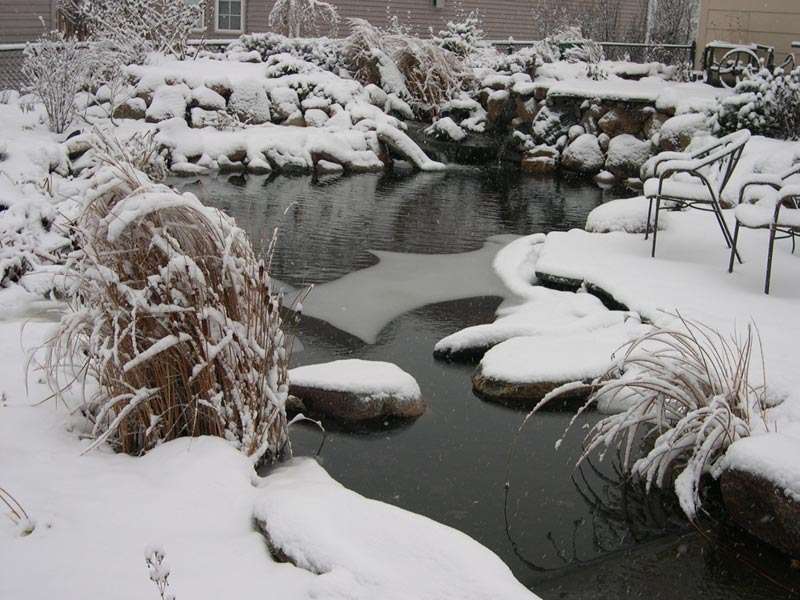
Quick answer: winterize a GTA pond in stages. Net the pond before the leaves drop, stop feeding once the water holds below 45°F (7°C), and have your de-icer and aerator running before the first hard freeze, usually by mid November.
This guide walks through the timeline, the pump decision, the equipment that keeps fish alive under the ice, and a full checklist you can work through in a weekend.
When to Winterize a Pond in Ontario
Watch the water temperature, not the calendar. A pond thermometer is the cheapest piece of winterizing equipment you will buy, and it makes every other decision for you.
| Water temperature | What to do |
|---|---|
| Above 60°F (16°C) | Feed normally, net the pond before leaves start dropping |
| 50 to 60°F (10 to 16°C) | Reduce feeding, trim back dying plants, do the final cleanout |
| Below 45°F (7°C) | Stop feeding for the season, decide on your pump |
| First hard freeze | De-icer and aerator in and running |
The 45°F feeding cutoff comes from Michigan State University Extension, and it matters more than most pond owners realize. Fish digestion shuts down in cold water, so late-season food can rot inside them. Our end-of-season pond care guide covers the cleanout side in detail.
Should You Run a Pond Pump in Winter?
For most GTA ponds, no. Shut the pump down once water sits near 40°F (4°C), pull it, and store it indoors in a bucket of water so the seals stay wet.
Running water all winter looks beautiful, but a waterfall left running builds ice dams that can redirect water out of the pond and drain it. If you do run through winter, check the lines weekly. Sizing and flow are covered in our pond pump guide.
There is a second reason to shut down: in winter the warmest water sits at the bottom, where your fish wait out the season. A pump churning the full depth pulls that warm layer up and chills the whole pond.
Do You Need a Pond De-Icer?
A de-icer does one job: it keeps a small hole open in the ice so gases from decaying material can escape and oxygen can get in. It does not warm the pond, and it does not need to. That one opening is what keeps fish alive through an Ontario winter.
How to Keep Pond Fish Alive in Winter
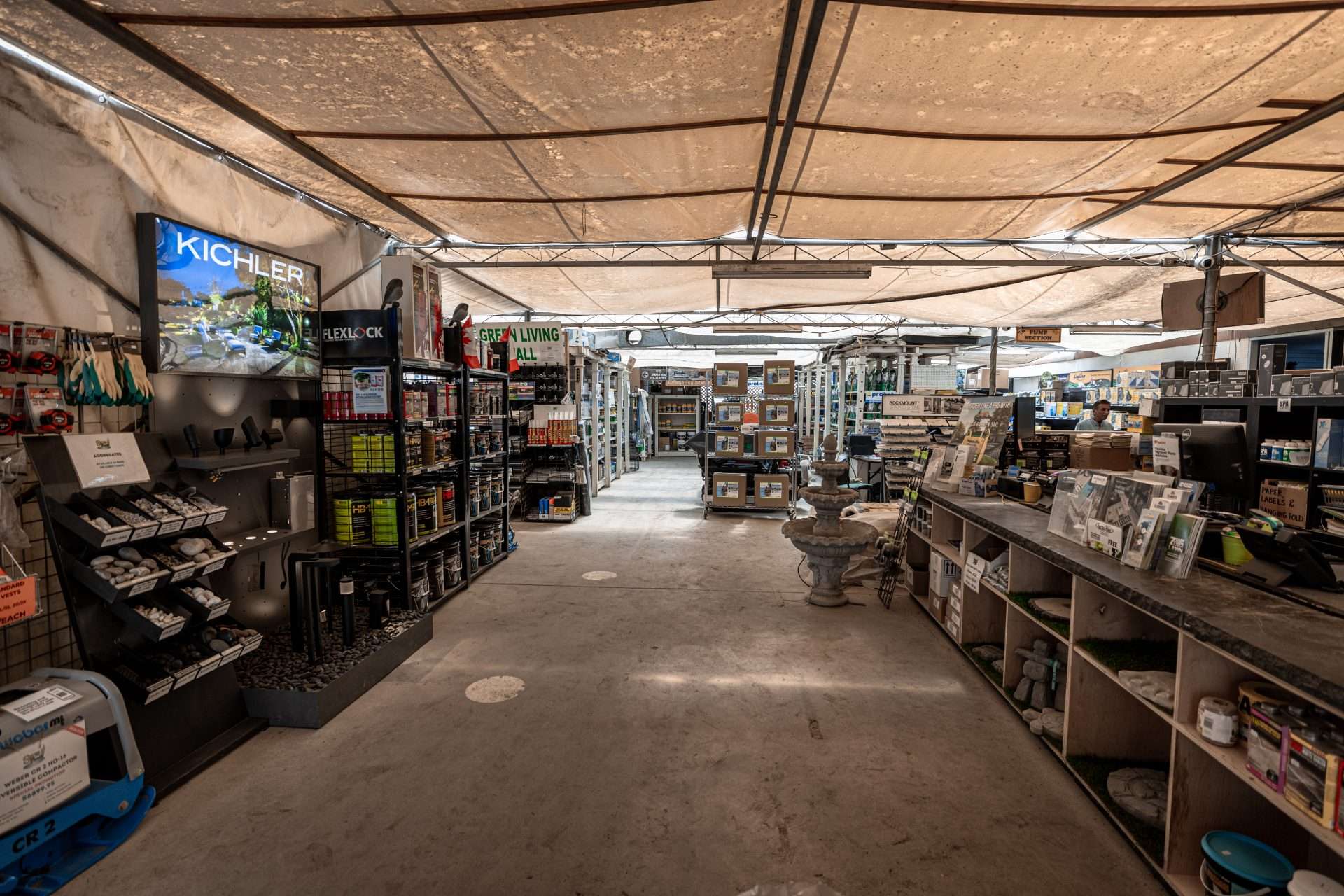
Koi and goldfish handle Canadian winters well if the pond gives them two things: a deep zone that never freezes, and steady gas exchange at the surface. Aim for at least 2 feet of depth where the fish can settle, and keep part of the surface open all season.
“Keep at least 10 percent of the surface of your pond open for gas exchange.”
Beth Clawson, Michigan State University Extension
Pair the de-icer with an air pump set on a shallow shelf. The bubbles push trapped gases out and pull oxygen in, and the two units together cost less to run than most people expect.
One thing you should never do is break the ice by striking it. The shock waves travel through the water and can injure dormant fish, a caution the Royal Horticultural Society repeats in its pond care guidance. If the pond seals over, set a pot of hot water on the ice and let it melt through.
“Some ice in the pond is okay, but thick ice should not be allowed to develop and seal off the pond.”
Lynnette Swanson, Laurie Fox, and colleagues, Virginia Cooperative Extension
Pond Winterization Checklist
Work through these in order as the temperatures fall. Most GTA ponds need one afternoon for the cleanout and one for the equipment.
- Net the pond before the leaves drop. Pulling leaves out later is the worst job in pond keeping.
- Trim dying plants back below the waterline and move tender floaters indoors.
- Do a final debris cleanout so there is less material breaking down under the ice.
- Add cold water bacteria to keep breaking down waste after regular bacteria go dormant.
- Stop feeding once the water holds below 45°F (7°C).
- Pull and store the pump, or commit to weekly checks if you run it through winter.
- Install the de-icer and aerator before the first hard freeze, not after.
Where to Buy Pond Winterization Supplies in Mississauga
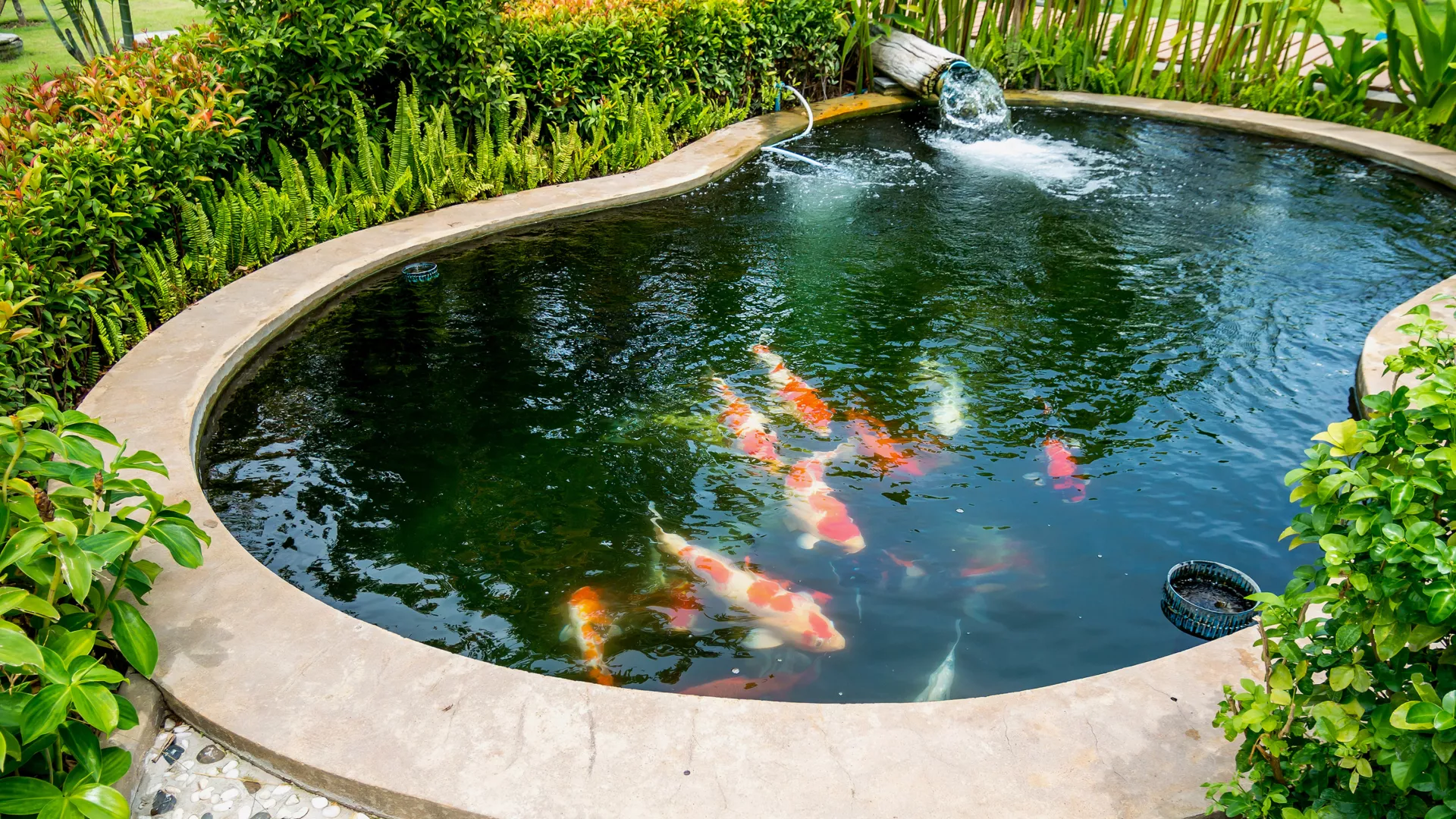
Sid’s stocks the full winter lineup: de-icers, air pumps, pond netting, cold water bacteria, and thermometers. Browse pond supplies and pumps and filters online, or visit us at 6000 Ninth Line in Mississauga.
Not sure what your pond needs? Bring its rough dimensions and fish count, or contact us and we will put the right winter kit together for you.
Pond Winterization FAQs
When should I stop feeding my pond fish?
Stop for the season once the water holds below 45°F (7°C). Michigan State University Extension notes fish entering dormancy cannot properly digest food, even if they still act hungry. Between 50 and 60°F, cut back to light feeding every few days.
Can koi survive winter in an Ontario pond?
Yes, if the pond has a zone at least 2 feet deep and an opening in the ice all winter. The fish go dormant near the bottom and need very little. Shallow ponds and container features are the exception: bring those fish indoors for the season.
Should I break the ice on a frozen pond?
No. Striking ice sends shock waves through the water that can injure dormant fish. Melt an opening instead: set a pot of hot water on the surface, then keep it open with a de-icer so you do not have to do it twice.
Do I need both a de-icer and an aerator?
Together they cover both halves of the job. The de-icer keeps the breathing hole open and the aerator moves oxygen in and gases out. Our pond aeration guide covers year-round setups in more detail. For a plant-only pond with no fish, you can usually skip both and let it freeze naturally.

